Sealcoating in Columbia, SC
UV protection for asphalt in a market where the sun does the worst of the damage.
Request Your Free Estimate (803) 369-3545Sealcoating in Columbia, SC
A1 Asphalt Columbia sealcoats residential driveways and commercial parking lots across Columbia and the surrounding Midlands. In a climate where UV oxidation is the primary driver of asphalt failure, a properly applied sealcoat on a two-to-three-year cycle protects the binder, blocks water from reaching the base, and dramatically extends the service life of every surface we put down.
Why Sealcoating Matters in the Midlands
Asphalt is held together by binder — a petroleum product that the sun systematically attacks. UV breaks the binder down through oxidation, leaving behind aggregate that's no longer held together properly. You see it as the gray, faded look that takes over an unprotected driveway within a few summers in Columbia. Once oxidation sets in, water gets between the aggregate, the surface starts raveling, and cracks open. Sealcoat is a thin protective layer — coal-tar emulsion or asphalt emulsion blended with sand for traction and additives for durability — that blocks UV from reaching the binder and seals the surface against water, fuel, and oil intrusion. In a freeze-thaw market, sealcoat helps but isn't the dominant factor. Here in the Midlands, where direct sun and heavy summer rain are the main attacks, it's the single highest-return maintenance dollar you can spend on asphalt.


Get Your Free Estimate
Limited Slots Available This Month!
Coal-Tar vs. Asphalt Emulsion
There are two main sealer types. Coal-tar emulsion has been the industry workhorse for decades — excellent fuel and oil resistance, deep black finish, long service interval, and proven performance in commercial applications. Some jurisdictions have moved away from coal-tar over environmental concerns, and the EPA and various municipalities regulate or restrict its use. Asphalt-emulsion sealers (and newer hybrid formulations) are the alternative, with improved formulations that approach coal-tar performance. We discuss which sealer fits your property — residential drives, parking lots, fuel-exposed surfaces — and any local restrictions during the estimate. Both products require proper surface prep, proper application temperature, and the right number of coats to perform. The sealer choice matters; the application discipline matters more.
Application — What Separates a Good Seal Job
Most sealcoating failures come from one of three issues: applying over a dirty or oily surface, applying in the wrong weather, or applying too thin. We pressure-clean and blow-clean every surface before sealer touches it. Oil spots get primed with an oil-spot primer so the sealer bonds where it normally wouldn't. We apply when the surface is dry, ambient temperatures are above about 55°F and rising, and there's no rain in the forecast for at least 24 hours after application. Most jobs get two coats — first cuts and edges with brush or squeegee, then the body of the surface with squeegee or spray to a uniform thickness. Cracks larger than about a quarter-inch get filled with hot-pour rubberized crack sealer before the sealcoat goes on; otherwise the sealer bridges the crack temporarily and water still gets in. Done right, a sealcoat job gives you a deep black finish, a uniform texture, and 2 to 3 years of protection before the next cycle.
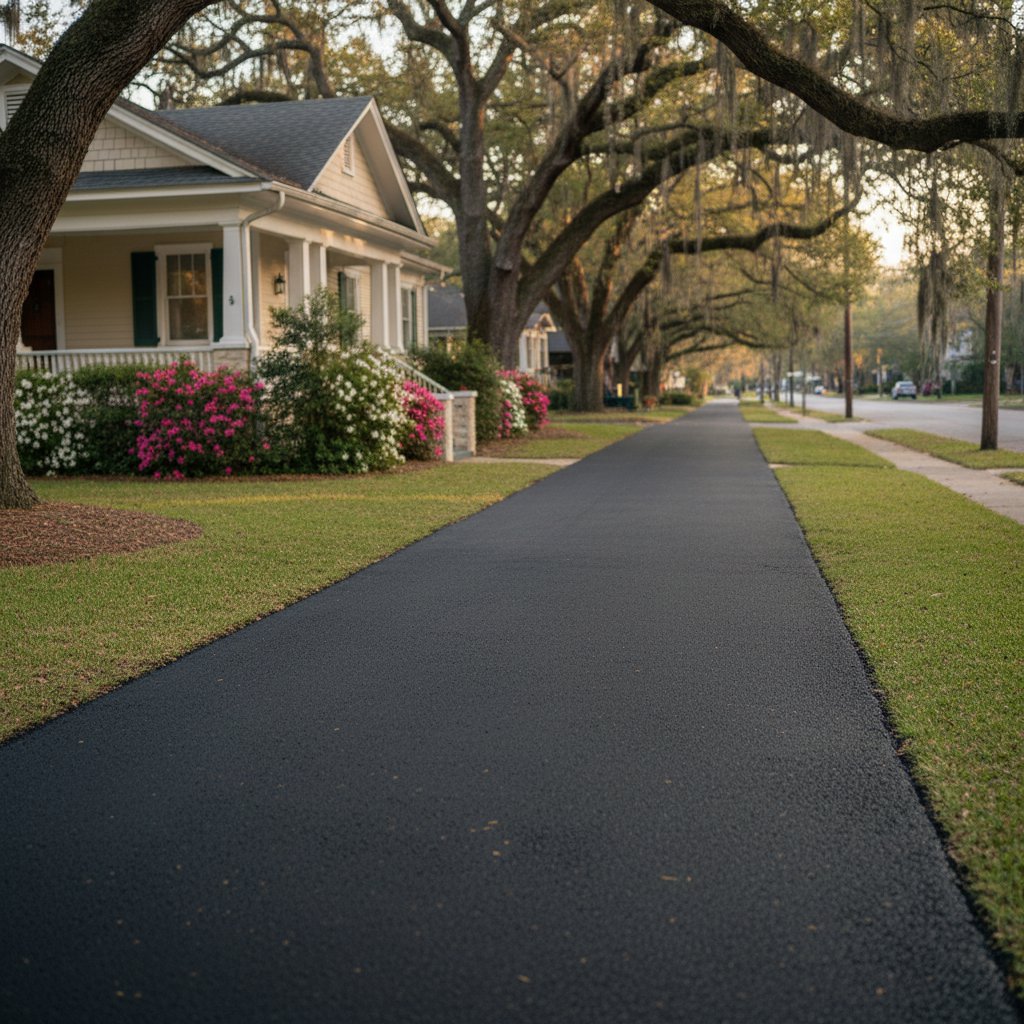
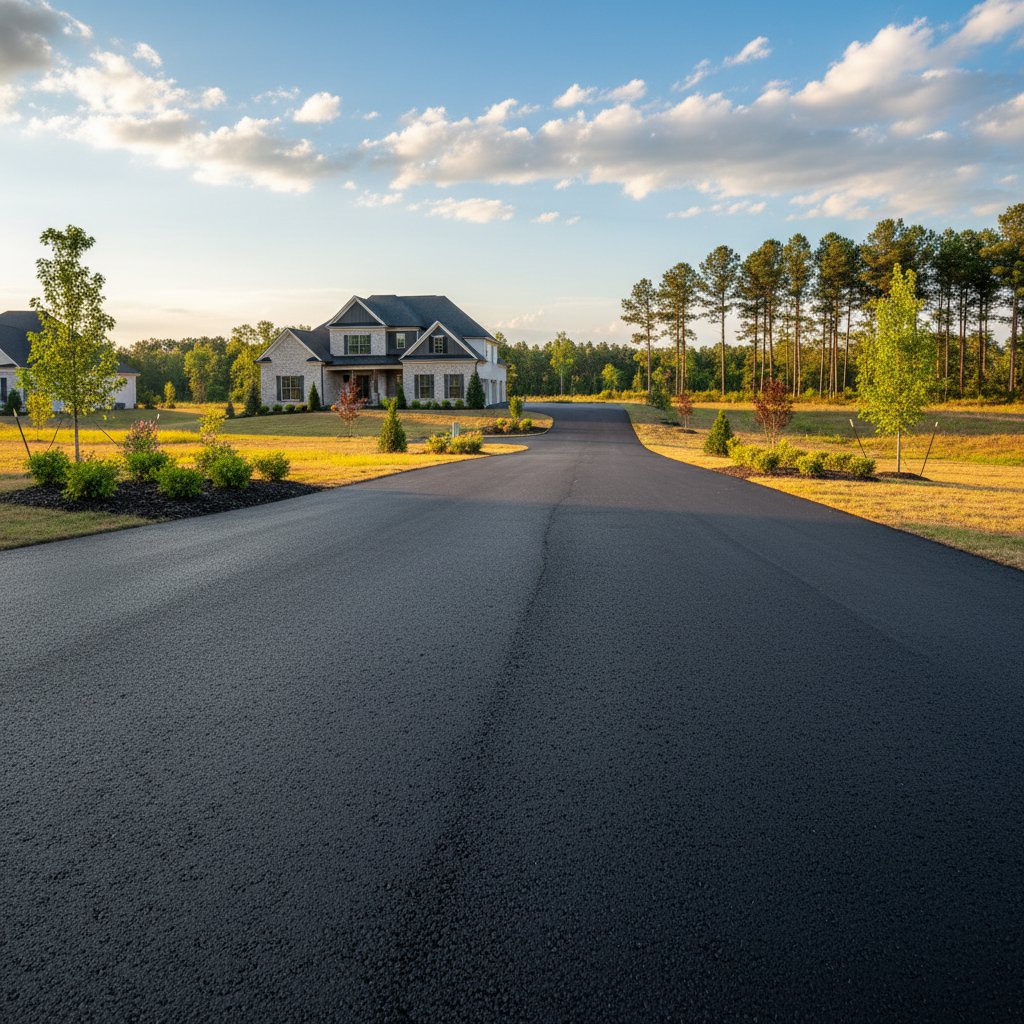
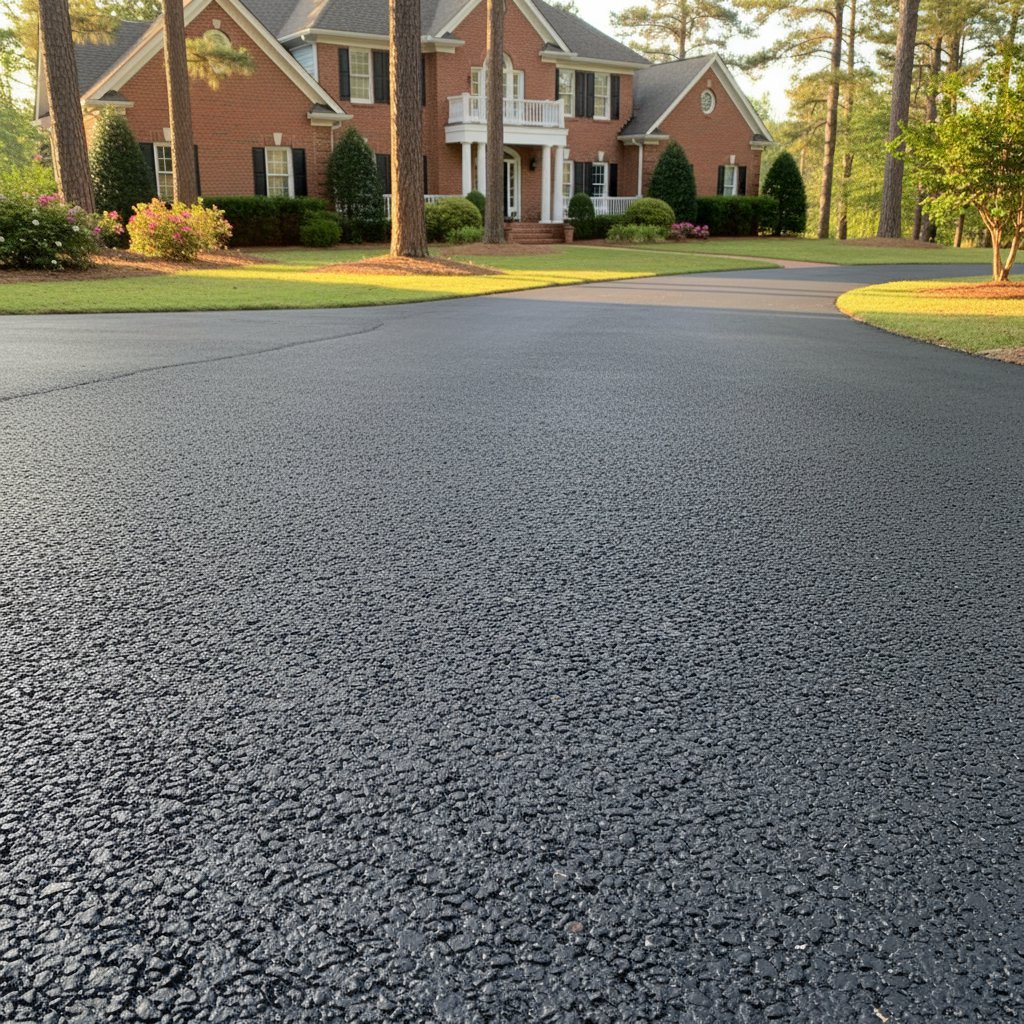
Recent Sealcoating Projects in the Midlands
Signs Your Pavement Needs Sealcoating
Sealcoat works best as preventive maintenance — applied before the surface fails, not after. Here's how to tell when you're due.
Surface Color Faded to Gray
Black asphalt that's faded to a uniform gray tells you the binder is oxidizing. Sealcoat now and you protect what's left; wait another year and you start losing aggregate.
Sealcoat Was Applied 2+ Years Ago
In the Midlands climate, a quality seal job runs 2 to 3 years before it needs renewal. If it's been longer than that, you're past the protection window.
New Asphalt That's 6 to 12 Months Old
Brand-new asphalt needs to cure before its first sealcoat — typically 6 to 12 months. Once that window closes, the first protective coat sets the long-term maintenance schedule.
Hairline Cracks Starting to Develop
Surface cracks small enough that you can barely see them are a signal the binder is fatiguing. Sealcoat blocks water from reaching them and slows their growth dramatically.
Our Sealcoating Process
Every sealcoat job follows the same prep-cure-apply discipline, residential or commercial.
Surface Assessment and Quote
We walk the surface, identify any prep work (cracks, oil spots, patches), recommend single or double coat, and provide a flat written quote.
Clean and Crack-Fill
Surface is pressure-cleaned and blown clear, oil spots are primed, and cracks larger than a quarter-inch are filled with hot-pour rubberized sealant.
Apply in Proper Weather
Sealer is applied at proper temperature with no rain in the forecast for the cure window. Edges are cut with brush or squeegee; the body is applied uniform thickness.
Cure and Stripe
Foot traffic in 4 to 8 hours, vehicles after 24 hours in summer heat. Parking lots are restriped over the cured sealer if striping is part of the scope.
What Our Clients Say
"Long gravel driveway off Devine Street that had washed out twice in heavy summer storms. Their crew regraded the whole approach, ran a proper compacted base, and laid hot mix that's holding tight against the front porch line. After two seasons of August downpours, no rutting, no soft spots — just a clean black surface that drains the way it should."

Ready to Protect Your Pavement?
Call A1 Asphalt Columbia at (803) 369-3545 or request a sealcoating quote online. We schedule residential drives and commercial lots throughout the Midlands paving season.