Crack Filling & Sealing in Columbia, SC
Hot-pour rubberized sealant in routed, cleaned cracks — the cheapest way to keep water out of your base.
Request Your Free Estimate (803) 369-3545Crack Filling & Sealing in Columbia, SC
A1 Asphalt Columbia fills and seals asphalt cracks across Columbia and the surrounding Midlands. Crack filling is the most cost-effective preventive maintenance you can do on a paved surface — it stops water from reaching the base, slows crack propagation, and significantly extends the life of every driveway and parking lot we put down.
Why Crack Sealing Matters
Every crack in asphalt is a path for water to reach the base. Once water gets under the surface, it softens the subgrade, washes fines out of the base aggregate, and accelerates failure — turning a hairline crack into a pothole within a few seasons. In the Midlands we don't get the freeze-thaw cycle that opens cracks aggressively in northern markets, but our heavy summer rain still drives plenty of water through every unsealed crack on a driveway or parking lot. Hot-pour rubberized sealant is a flexible asphalt-based product that bonds to the crack faces, stays elastic through temperature swings, and keeps water out for several years per application. Spending a few hundred dollars on crack sealing now is what prevents spending thousands on pothole repair or full reconstruction down the road. It's the highest-leverage maintenance dollar in the entire trade.


Get Your Free Estimate
Limited Slots Available This Month!
Routing, Cleaning, and Hot-Pour Application
Crack sealing is more than squeezing caulk into a line. We route working cracks first — a routing wheel cuts a clean reservoir along the crack so the sealant has room to bond and flex without being squeezed out of the joint as the pavement moves. Routing isn't required for every crack; tight hairlines get cleaned and filled flush, while larger working cracks get the reservoir cut. Every crack gets blown clean with high-pressure compressed air — dust, debris, vegetation, and moisture all have to come out before the sealant goes in or it won't bond properly. Hot-pour rubberized sealant is melted in a mobile kettle to about 380°F and applied with a wand into the prepared crack. We squeegee or band the surface for a clean finish that won't track on tires, and the sealant cures to a flexible, weatherproof joint within an hour.
What Gets Sealed, What Doesn't
Crack sealing works on cracks roughly 1/4 inch to 1 inch wide that aren't surrounded by failed pavement. Hairline cracks too tight to receive sealer get protected by sealcoat instead. Wider cracks — over an inch, or where the asphalt around the crack is crumbling — typically need patch repair instead, because filling a crack in failed surrounding pavement doesn't address the actual problem. Alligator-cracked areas can't be crack-sealed at all; they need full base repair or replacement. We walk every project, identify which cracks are good candidates for sealing, which need different treatment, and which areas need to be combined with sealcoating for full protection. The right scope for your surface gets written into the quote.
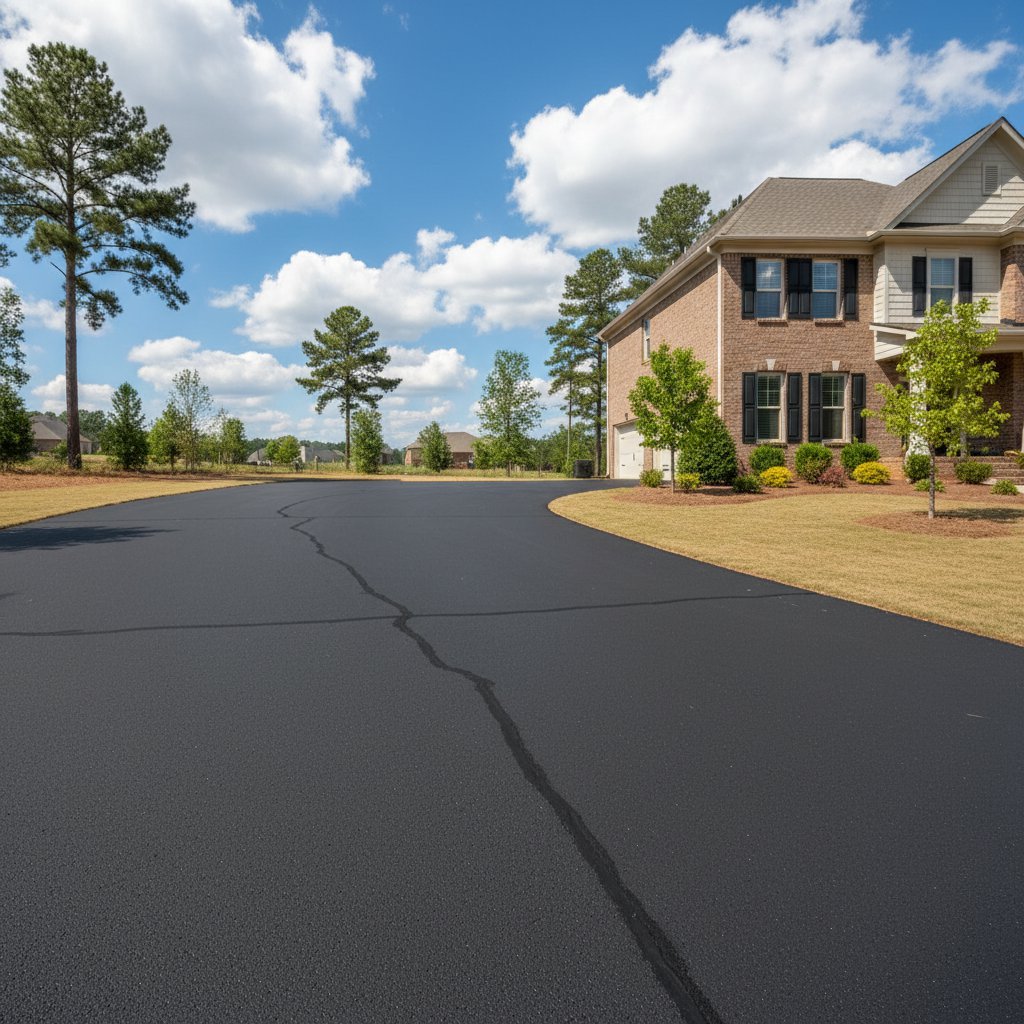
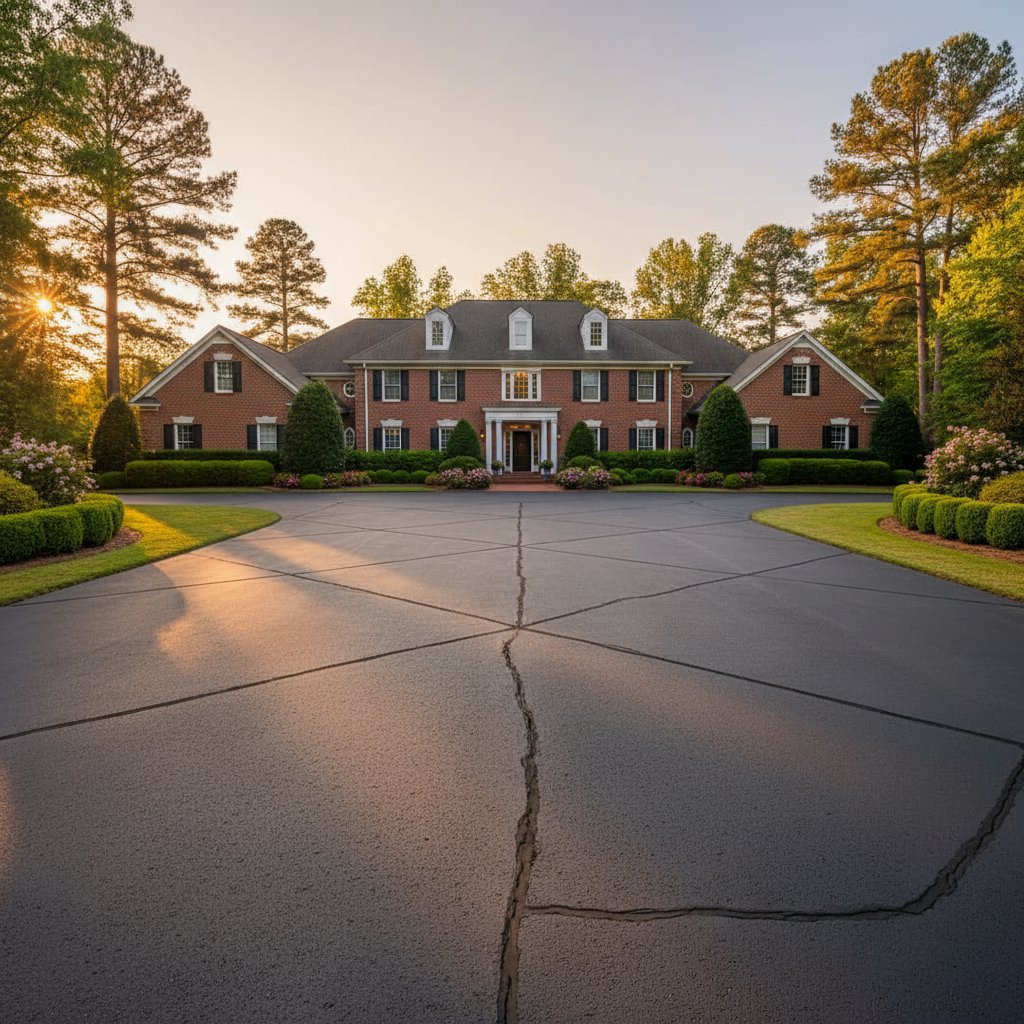
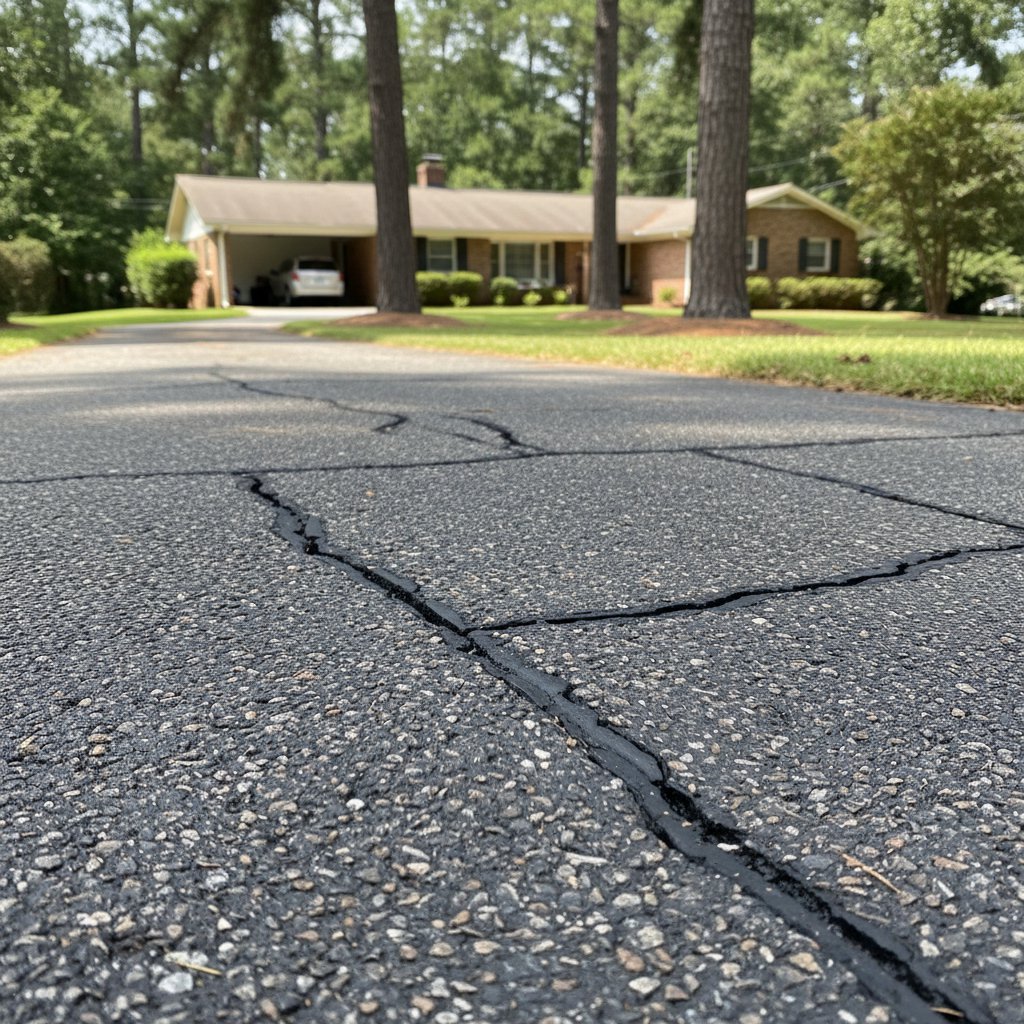
Recent Crack Sealing Projects
Signs You Need Crack Sealing
Crack sealing is preventive — done at the right time, it's the cheapest thing you'll spend on asphalt. Here's when to do it.
Visible Cracks Wider Than a Quarter Inch
Cracks you can fit a coin into are wide enough to admit serious water and need sealing before they grow.
Block or Transverse Cracking
Rectangular cracking patterns or cracks running across drive lanes are working cracks — they open and close with temperature and traffic, and rubberized sealant stays flexible with them.
Before a Sealcoat Application
Sealcoating bridges hairline cracks but doesn't seal larger ones. Crack-fill first, then sealcoat — that's the order that actually protects the pavement.
Cracks Around Patches or Joints
Cracks form along the perimeter of old patches and at cold joints. Sealing them stops water from getting under the patch and lifting it.
Our Crack Sealing Process
Every crack-seal job follows the same prep-and-pour discipline. Skipping steps is the only way it fails.
Surface Walk and Quote
We walk the lot or drive, identify which cracks need sealing, distinguish from cracks that need repair instead, and quote by linear foot or by lump sum.
Route Working Cracks
Larger working cracks are routed to a clean reservoir so the sealant has proper depth and bonding surface.
Clean with Compressed Air
Every crack is blown clean with high-pressure air to remove dust, debris, and moisture before sealant goes in.
Hot-Pour Application and Finish
Rubberized sealant is heated and applied at proper temperature, banded for a clean surface finish, and cured to traffic-ready within an hour.
What Our Clients Say
"Long gravel driveway off Devine Street that had washed out twice in heavy summer storms. Their crew regraded the whole approach, ran a proper compacted base, and laid hot mix that's holding tight against the front porch line. After two seasons of August downpours, no rutting, no soft spots — just a clean black surface that drains the way it should."

Ready to Get Cracks Sealed?
Call A1 Asphalt Columbia at (803) 369-3545 or request an estimate online. We crack-seal driveways, parking lots, and private roads throughout the Midlands paving season.